
CLICK TO PLAY/PAUSE MUSIC

Alternatives & Feasibility Analysis.
“Alternatives and Feasibility Analysis" is a critical step most residential design and construction services DO NOT OFFER — and where the biggest mistakes are made. Most move directly into design or construction of solutions they have provided to other owners. "Alternatives and Feasibility Analysis" is a separate, open-minded, analytical service performed BEFORE design and construction; to compare the owner’s real options and reveal the "Best Fit" solution.
What is Alternatives & Feasibility Analysis.
Alternatives and Feasibility Analysis is a professional planning method used in real estate development to evaluate AND COMPARE ALL project options before major financial commitments are made.
Who uses "ALTERNATIVES and FEASIBILITY ANALYSIS " and Why?
“Alternatives Analysis” is traditionally used by top-rated, experienced, sophisticated, real estate developers, investors, architects, lenders, contractors, and experienced property owners to determine whether a proposed project makes strategic, financial, legal, and practical sense BEFORE major commitments are made.
Developers use this process to protect investments, avoid costly mistakes, maximize opportunities, and determine the “best fit” direction for a property BEFORE moving into design or construction.
In California—where zoning laws, wildfire regulations, permit procedures, engineering requirements, insurance limitations, and construction costs are unusually complex and expensive — even relatively small residential projects can benefit from this type of analysis.
In wildfire rebuilding, Alternatives Analysis serves an even more important purpose because owners are ot limited to simply rebuilding a house. And often being forced into major decisions during “Disaster Times,” when emotions, financial uncertainty, insurance pressure, and multiple conflicting directions create confusion and unease.
Instead of rushing into premature commitments, Alternatives Analysis helps organize the alternatives into a clear and categorized selection by evaluating the owner’s real options, future needs, financial realities, risks, and strategic opportunities before committing more time and money.
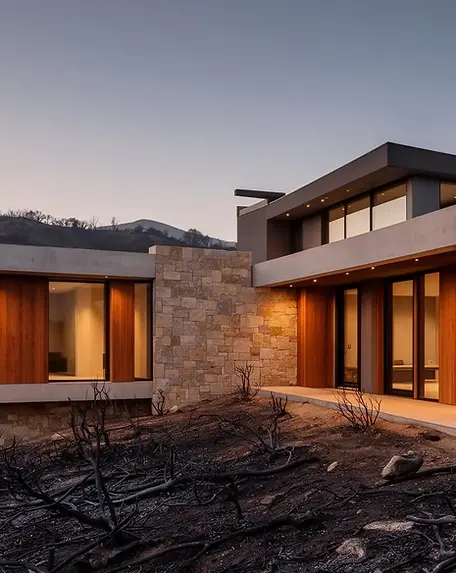
Why Wildfire Rebuilds
Need This Process After a Fire
For wildfire survivors, this process is especially important because
-
the owner is not LIMITED to simply “building a house.”
They are re-deciding how their property will function for years to come.
Without a structured process, owners are forced to assemble decisions from disconnected sources — designers, contractors, insurance adjusters, and agencies — often leading to confusion and costly misalignment.
This process organizes those decisions into a clear path.
Common alternatives & issues
After a wildfire, you may not be simply deciding whether to “rebuild a house.”
You may be wisely evaluate multiple connected “puzzles” regarding the future use, function, cost, and direction of the property. Many of these decisions affect one another and can create confusion when approached out of sequence.
FAMILY / LIFESTYLE ALTERNATIVES
You may be evaluating:
-
rebuilding the previous (like-for-like) home
-
building larger or smaller
-
creating multi-generational living arrangements
-
accommodating future family growth or retirement needs
-
improving privacy, comfort, activities, or lifestyle functions
FINANCIAL / INCOME ALTERNATIVES
You may also be considering:
-
adding ADUs or Junior ADUs
-
integrating rental or income-producing spaces
-
phasing the project over time
-
managing insurance limitations, payout conditions, and schedules
-
responding to mortgage-company controls and funding restrictions
STRATEGIC / PROPERTY ALTERNATIVES
Additional property and long-term planning considerations may include:
-
selling or partially developing the property
-
improving fire resistance and sustainability
-
adding security systems, water features, storage, or special amenities
-
preparing for permit, site, soil, utility, and construction-cost realities
-
determining the highest and best long-term use of the property
Without a structured Alternatives Analysis process, these interconnected decisions are often approached separately by different companies, agencies, and advisors. This leads to
-
confusion,
-
missed opportunities,
-
unnecessary costs,
-
commitments
made before you fully understand the consequences and alternatives.
Feasibility Factors we study.

Property & Site Feasibility
-
The conditions and unique characteristics of the property
-
Site conditions, access, utilities, grading, soil
-
Property Lines
-
The owner’s vision for the property

Legal & Code Feasibility
-
"Cause of Fire" Lawsuit & Payouts
-
Zoning, setbacks, height limits
-
Fire rebuild allowances and restrictions
-
Permit pathways and agency approvals

Financial Feasibility
-
Total Financial Resources vs real construction cost
-
Insurance proceeds and limitations
-
The amounts and requirements of each funding source
-
"Gap Funding", Financing structure, and cash flow timing

Design & Use Feasibility
-
The realistic physical structure options on this property
-
The owner’s best fit for lifestyle and future plans
-
Space planning, ADUs, expansion potential
-
SB9, SB1123

Schedule Feasibility
-
Owner’s timeline
-
Timeline from design to permit to construction
-
External delays (city, county, utilities, debris clearance)

Risk Assessment
-
Cost escalation exposure
-
Contractor pricing variability
-
Unknown site or regulatory conditions
Questions Owners Should Answer Before the Analysis Begins
→ How far into the future can I foresee situations I want to plan for ?
→ Who will live here now and in the future?
→ What is the stage of life of each of the people that should be planned for?
→ Accommodating new generational occupants?
→ Accommodations for extended family growth and offspring?
→ What level of financial and construction risk am I comfortable with?
→ Do I want the property to be used for other formal activities like rentals or storage etc. ?
Goals of the Process
The goal is not to pressure or tell the owner what to do.
The goal is to help the owner slow the process down long enough to clearly understand the realistic alternatives, consequences, risks, opportunities, and recommended paths forward before major commitments are made.
The purpose of Alternatives Analysis is to help the owner:
1 review the realistic alternatives and choices available.
2 compare the likely consequences, challenges, costs, and benefits.
3 understand the most logical and strategic path forward.
4 move forward with greater clarity, confidence, and control.
5 reduce confusion, uncertainty, and costly missteps.
6 establish better organization and direction before making commitments of time and money.
7 restore a greater sense of peace of mind during a difficult and overwhelming process,
